O Monge E O Executivo Pdf
Loading Page 1. There was a problem loading more pages. O Monge e o Executivo.pdf. O Monge e o Executivo.pdf. Displaying O Monge e o Executivo.pdf.
Overall, I found this book to be scripted and cliche'. The teacher only seems to get asked questions to which he has the answers.
The individual characters seem like charicatures. I find the way in which they all become equally enlighted at the of the story to feel really fake. That said, this book has some really good points. Most of them borrowed from others who have said it better and simply regurgitated here using narrative format with very simple language.
Personally, I have found the greate Overall, I found this book to be scripted and cliche'. The teacher only seems to get asked questions to which he has the answers. The individual characters seem like charicatures. I find the way in which they all become equally enlighted at the of the story to feel really fake. That said, this book has some really good points. Most of them borrowed from others who have said it better and simply regurgitated here using narrative format with very simple language. Personally, I have found the greatest success (there have been few for me as a leader) when I have placed myself in the service of others.
It is also helpful in understanding the need to meet peoples needs rather than just their wants. Good things to say about bounderies, integrity, and so on. However, I really must take issue with a number of the points the book makes. PG 32-33 All employees are volunteers of sorts. They can freely choose to work where they want. They can freely choose when to leave.
Well that ain't really so. Last time I checked there were a number of factors that limit our choices i.e. Education, age, geography, physical/mental capabilities, and so on. This book is a big proponent of free choice and a critic of determinism. Not surprising given its basis in evangelical thinking. They even site Frankl on matter of free choice later in the book. Fact is yes, we have choices but there are limitations on those choices.
This is not a bad thing, it just is. So basically, some folks stay in bad jobs because they need the money for food, rent, and gas. That can put them at a disadvantage when it comes to their relationship with their employer. Do not forget the power that money can yield in this society especially when you have limited sources of it. In many cases, the employer still holds a lot of the cards. Consider the children in developing nations that sew our childrens soccer balls together. PG 43-44 Money ranks #4 among what employees want.
Money still ranks and frankly it is a function of being treated with dignity and respect. Our financial compensation is based on how much value we create financially but it is also a reflection of how much value is placed on us. Consider the child mentioned above. Consider how much money he makes and then consider the profits of the soccer ball company. Consider the compensation of the CEO for that soccer ball company. Consider that workers wages have consistently declined while executive compensations and corporate profits have soared.
PG 120 Throw-away society No doubt we are a throw-away society and perhaps I am the worst offender in this regard. But I find the use of abortion to support this point to be problematic. There is a comment here suggests that the decision to have an abortion is as simple and easy as tossing away something unwanted. There are so many points to be made against this that I am not sure where to begin. But I will end here, this is a difficult decision for any person or couple to make. If they are pro-life (that's right folks pro-life people have abortions) or if they are pro-choice, it is a emotional, serious, and tough choice to make.
It is even tougher to follow through with. I would be naive if I did not say that there are people who are flipant about this decision but that is extremely rare. The vast majority of people make such a significant decision carefully and thoughtfully. Perhaps a better example, one that is never touched on very strongly, is the amount of resources that we use compared to our population. Not sure the exact percentages here but in the USA we consume a large portion of the available resources relative to our population. How about those gianormous SUVs we see crusing around the burbs?
You know the ones that get about 10 miles to the gallon? I could be wrong here but their sole purpose seems to be to prop up the ego.
/https://skoob.s3.amazonaws.com/livros/402155/DE_VOLTA_AO_MOSTEIRO__1405604933B.jpg "Federal University of Ceara")
Is that not wasting resources? The take more material to manufacture, utilize, and maintian than cars 1/2 to 1/3 their size. If the purpose of a vehicle is to get us and our gear from point A to point B AND a smaller vehicle will do the job, then isn't any vehicle larger than that in effect a waste? Is that not simply throwing away resources that could be better used elsewhere? Wouldn't our world be better served by a more wise use of our resources? How about applying servanthood in this context?
PG 153 Smokers blame cigarette companies to their addiction. For the most part, I have to agree with the book on this one but fact is the cigarette companies deliberately manipulated nicotine levels so as to maxmize the chances for the smokers addiction. Yes, everyone who put that first cigarette in their mouth made that choice freely AND there are plenty of people who struggled with the difficulty of quitting to shake the habit.
So we know it can be done. But the fact is, the cigarette companies stacked the deck.or pack.in their favor to intentionally addict users and ensure a continued market for their product.
They even went so far to create cartoon characters to market their product so as to get young people to smoke. Here again, coupled with nicotine levels intended to produce addiction, they ensure a stable and reliable market for their products and profits. All this while internal documents clearly and directly link their product to cancer and heart diesease. Were it not for these actions, the books point would have been stronger.
If we are talking about being servants here then where is the service in the cigarette companies actions? Where is their responsiblity? There is a subtle message here that corporations are not to blame for the impact of their actions. Why isn't the notion of responsibilty that is applied to individuals also leveled at corporations? PG 154 The Twinkie Defense This is simply a bad example. The so called Twinkie Defense was hyped by the media to grab the public's attention and create ratings.
If you take about 10 seconds to drill down into the issue, you would find that the legal defense of Dan White based based on a bi-polar disease and not twinkies. Twinkies were simply evidence supporting an overall defense based upon mental illness.
And from what little I know, the guy was definately whacked. He should be held responsible but still he was whacked out. My point is this. As a casual observer of the news, we can have these sort of knee-jerk reactions and comments. As a published author, one has a greater responsibility to get their story straight. Otherwise, we simply perpetuate a half-baked understanding of the facts. Where is the servant in that?
Okay, I am off my soap box. Overall a great read - another practical leadership book told in story form. Interesting cast of characters getting leadership coaching from a cloistered Monk who once was a renowned leader in industry. Nothing earth shattering, but again examples that drove home some concepts, and ideas on how to approach something’s. Key takeaways; 1: Listening - 'true' listening is selfless.
2: Leadership is a choice (You chose it). 3: It is huge responsibility to have been entrusted with the well being of so man Overall a great read - another practical leadership book told in story form. Interesting cast of characters getting leadership coaching from a cloistered Monk who once was a renowned leader in industry. Nothing earth shattering, but again examples that drove home some concepts, and ideas on how to approach something’s. Key takeaways; 1: Listening - 'true' listening is selfless. 2: Leadership is a choice (You chose it).
E/o Meaning
3: It is huge responsibility to have been entrusted with the well being of so many people. Think about these people are spending nearly 1/3 of their working life with you, consider the environment you are creating, people are counting on you.
4: Leadership is a skill - The skill of influencing people to work enthusiastically toward goals identified as being important. 5: Leadership is about authority not power. Power - The ability to force or coerce someone to do your will, even if they would choose not to, because of your position or might. Authority: The skill of getting people to willingly do your will because of your personal influence. 6: Upside down triangle, who is closet to the customer, and is we as leaders servicing their 'needs”, not wants.
7: Upside down triangle #2 for a leadership model Leadership begins with 'Will' - Aligning our intentions with actions and our choice of behavior, we can choose Love (The Verb) and ID and Meet the legitimate needs of people (Not wants)- as a result we will have to serve and sacrifice - where we build influence and authority and eventually earn the right to call ourselves leaders. 'ID and meet needs. Serving is different from being slave. 8: Love the Verb (Agape-from the bible) not a feeling. Everyone who needs a kick in the pants to get life/job/relationships back on track needs to read this book. It's not just for those wanting to be good 'leaders', it's for those that want to be better people. I loved this book because the author was not pretentious in any way.
He had absolute faults -not slight faults that really don't matter and in no way illustrate the magnitude of the point (cough cough, Stephen M.R. Covey) -real faults, real moments of shame, insecurity, and need for gr Everyone who needs a kick in the pants to get life/job/relationships back on track needs to read this book. It's not just for those wanting to be good 'leaders', it's for those that want to be better people. I loved this book because the author was not pretentious in any way.
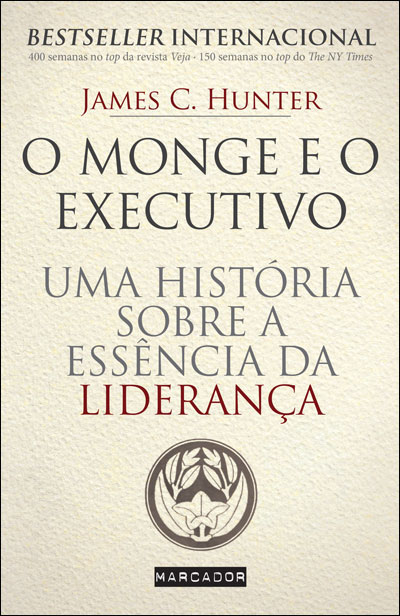

Federal University Of Ceara
He had absolute faults -not slight faults that really don't matter and in no way illustrate the magnitude of the point (cough cough, Stephen M.R. Covey) -real faults, real moments of shame, insecurity, and need for growth.
I didn't feel like I was reading a book about some guy who used to get it wrong, and now gets it right. I felt like I was reading a book about a guy who understands that we get the opportunity to get it right or wrong every day. That none of us live in any way with perfection, but that we try to adhere to principles of leadership as much as possible. If you read only one book on leadership.please, don't choose this one. Derivative, ham-fisted and dumbed down beyond the point of obvious, Hunter takes the childish simplicity of something like Blanchard's didacticism and bafflingly makes it even more banal. And he's blind to his flaws.
Tell me what's wrong with this, Hunter's introduction to the cast of caricatures.uh, characters.he'll use to hammer.uh, illustrate.his points: The teacher asked the six of us to introduce ourselves w If you read only one book on leadership.please, don't choose this one. Derivative, ham-fisted and dumbed down beyond the point of obvious, Hunter takes the childish simplicity of something like Blanchard's didacticism and bafflingly makes it even more banal. And he's blind to his flaws. Tell me what's wrong with this, Hunter's introduction to the cast of caricatures.uh, characters.he'll use to hammer.uh, illustrate.his points: The teacher asked the six of us to introduce ourselves with a brief bio along with our reasons for attending the retreat. My roommate - Lee, the preacher - introduced himself first, followed by Greg, a young and rather cocky drill sergeant from the U.S.
Theresa, a Hispanic public school principal from downstate spoke next, and then Chris, a tall, attractive, black woman who coached women's basketball at Michigan State University. A woman named Kim introduced herself ahead of me and started telling us about herself but I wasn't listening.
I was too busy thinking about what I would say about myself when it was my turn to speak. Apart from the stereotypes (emphasized from start to finish.the drill sergeant and preacher go at each other a lot, by irritatingly overdone design), anything else? I'll come back to that. Peppered throughout his parabolical tale, Hunter.
Reveals.the obvious, cloaked in pseudo-wisdom ('The key then to leadership is accomplishing the tasks at hand while building relationships.' - his italics) And then blather like 'Our unconscious mind and the dreams it gives us has untold riches that we are only beginning to understand.' Hunter didn't even have the decency to acknowledge Ross Perot when poaching Perot's quote on management, people, and inventories. Or Noel Burch for the four stages of competence. There's nothing wrong with rewriting old stuff by others into a new story.but at least give credit. Now, as with most of these hackneyed parables on which I rant, I can allow that there are nuggets to extract and add to your toolbox, or at least remind you of some of the tools you already have (more reminder than teacher, this one).but you have to wade through the peat and sift the muck to find the treasures.
Fortunately, applying a modicum of intellect will help the baby seals escape the clubbing Canadians and the discerning readers can sidestep the drivel. And finally, at risk of offending for such an obvious observation, why did Hunter need to apply the sexist ' attractive' to the tall black woman (who was a. Basketball coach)?
1.5 stars, rounded up. I enjoyed reading this book. The author weaves the tail of an executive who, while visiting a monastery attains lessons on authority and leadership. The author explains that trust is essentially built by pushing others to gently achieve their NEEDS (not wants) which in return builds an eagerness in others to follow you. The author also makes the clear distinction that POWER = Foreceful cohesion and that the ability to force or coerce someone to do your will (Do it or I'll fire you, do it or we'll bomb I enjoyed reading this book.
The author weaves the tail of an executive who, while visiting a monastery attains lessons on authority and leadership. The author explains that trust is essentially built by pushing others to gently achieve their NEEDS (not wants) which in return builds an eagerness in others to follow you.
The author also makes the clear distinction that POWER = Foreceful cohesion and that the ability to force or coerce someone to do your will (Do it or I'll fire you, do it or we'll bomb you, d o it or i'll beat you up) will generally result in a poor short term solution. And that rather then having power over others it is wiser to build AUTHORITY - which requires patience, kindness, humbleness, respectfulness, forgiveness, honesty and commitment - along with the discipline to serve and sacrifice for others.
I created a nice animation which outlines the concepts here on youtube. An excellent book. This is a story-type tale of John Daily, a businessman whose outwardly successful life is spiraling out of control.
He reluctantly attends a weeklong leadership retreat at a remote Benedictine monastery. Along the way, he (and the other attendees) learns that the true foundaton of leadership is not power, but authority, which is built upon relationships, love, service, and sacrifice. Makes the important distinction between serving the needs of others vs being a slave to their w An excellent book. This is a story-type tale of John Daily, a businessman whose outwardly successful life is spiraling out of control. He reluctantly attends a weeklong leadership retreat at a remote Benedictine monastery. Along the way, he (and the other attendees) learns that the true foundaton of leadership is not power, but authority, which is built upon relationships, love, service, and sacrifice.
Makes the important distinction between serving the needs of others vs being a slave to their wants. Also, establishes and defines a Leadership Model as an inverted triangle with five levels.
Read the book to learn what the levels are. I read this book a year or two ago, and I'm REALLY glad that I read it again. New, important points were jumping out of every chapter! I had to read this book as a part of my training for a mission trip leadership position. Overall, I love the model presented of servant leadership, but I felt that the novel itself was contrived, cliche, dumbed-down, and full of the most unrealistic dialogue known to man. I think this content would have been better served by a more straightforward, non-fiction, informational book.
This blend between informative and narrative just ended up being a really clunky, poorly written allegory. If you're I had to read this book as a part of my training for a mission trip leadership position. Overall, I love the model presented of servant leadership, but I felt that the novel itself was contrived, cliche, dumbed-down, and full of the most unrealistic dialogue known to man. I think this content would have been better served by a more straightforward, non-fiction, informational book. This blend between informative and narrative just ended up being a really clunky, poorly written allegory. If you're thinking of reading it for the information of Servant Leadership, I'd recommend almost any of the dozens of other books written on the topic.
I was assigned this book because my job was bringing in the author to speak. I enjoyed the book but I must say by the end I felt like it was simply a regurgitation of all those leadership phrases bundled in one book, with the exception that Hunter pairs each revelation with a character. I'll practice hunters principles however I only take on the responsibility of a leader 4 months of the year, and unfortunately we had one of these motivational speakers come last year, and as hunter states 'nothi I was assigned this book because my job was bringing in the author to speak. I enjoyed the book but I must say by the end I felt like it was simply a regurgitation of all those leadership phrases bundled in one book, with the exception that Hunter pairs each revelation with a character. I'll practice hunters principles however I only take on the responsibility of a leader 4 months of the year, and unfortunately we had one of these motivational speakers come last year, and as hunter states 'nothing changed because nothing changed'. This book was written at the onset (1970) of what has become a common literary genre in leadership materials. It is a fictional work that simulates an one week retreat in a Catholic monastery.
The six participants and one former Fortune 500 leader turned monk spend six days walking through animated discussions about servant leadership principles. The main voice is from one of the participants named John Daily who is undergoing a series of life challenges at his factory and in his home life. Daily This book was written at the onset (1970) of what has become a common literary genre in leadership materials. It is a fictional work that simulates an one week retreat in a Catholic monastery.
The six participants and one former Fortune 500 leader turned monk spend six days walking through animated discussions about servant leadership principles. The main voice is from one of the participants named John Daily who is undergoing a series of life challenges at his factory and in his home life. Daily presents an intimate interpretation of how Simeon (the Monk/leadership expert) leads a diverse group of individuals towards a better understanding of authority. There is an added dimension of Simeon's personal interaction with John that brings a certain texture to the book. There are many poignant insights but none stands out as much as the insistence that our leadership paradigms should be based on the exercising of authority, not power. A main antagonist in the story is an Army sergeant who keeps challenge Simeon's philosophy on the grounds that it will not work in 'the real world'. This gives the book a grounding in the real life concerns that many grapple with as they process authority vs.
Power paradigms. Strengths of the book are: the persona of Simeon who facilitates a growing awareness of servanthood despite the participants' hesitations (i.e., he models the idea of Servant Leader), the thorough Christian worldview that is present without being dogmatic, the subtle way in which the writer uses his primary character to demonstrate transformative thinking and the lively interaction of well-defined character types (there is a preacher, women's college basketball coach, high school principle, the sergeant, nurse and John Daily).
The Servant Leader is very accessible and provides an excellent narrative for discussion on what is effective leadership. I plan to use it in my own teaching and, hopefully, inculcate it in my own leadership philosophy. I am surprised that this book is on the national best selling list in Brazil - while it has useful points, it is almost entirely anecdotal. It uses many inspirational quotes to get the author's point across and some examples from specific famous leaders and not much else. It discusses the Golden rule and how it applies to leaders, naming leaders who motivate others well. A few takeaways that I did find useful: start looking out for the good in others, and you'll see things you don't normally not I am surprised that this book is on the national best selling list in Brazil - while it has useful points, it is almost entirely anecdotal.
It uses many inspirational quotes to get the author's point across and some examples from specific famous leaders and not much else. It discusses the Golden rule and how it applies to leaders, naming leaders who motivate others well. A few takeaways that I did find useful: start looking out for the good in others, and you'll see things you don't normally notice (like when you are researching cars and then find yourself seeing those specific cars everywhere). Be genuine, sincere, and specific in your appreciation to reinforce specific behavior. Be humble to discard false masks.
Treat others like they're important, because they are. Leadership requires enormous effort - you must commit to being a leader so you don't have to resort to power (rather than authority). Some of the best teams with the most enthusiasm or energy are that way because the leader instills that as a top priority and a filter - those who are not enthusiastic, will not be welcome to work here. Discipline is to teach ourselves to do what is not natural until it becomes natural and a habit (to a young child, potty training is so unnatural). I was annoyed at a couple of lines where the nurse stated that people might use euthanasia to get rid of grandpa or have an abortion for frivolous reasons; what a way to attack a straw man. It's a short book that doesn't cover much that isn't already covered in other introductory leadership and morality books.
The audiobook on Hoopla has good narration. Absolutely hate this book.
Evangelism dressed up as leadership. Pretentious, hypocritical, sexist, toxic masculinity, and rigid gender stereotyping of the characters. Also borrowed without crediting some of the most central tenants from other religious, didn’t flush them out, and passed them off as unique to Christianity. Myth debunk: if you are going to claim that Christianity is the the largest world religion, it isn’t because Jesus was the “greatest leader.” Christianity portrays itself as a Absolutely hate this book. Evangelism dressed up as leadership. Pretentious, hypocritical, sexist, toxic masculinity, and rigid gender stereotyping of the characters. Also borrowed without crediting some of the most central tenants from other religious, didn’t flush them out, and passed them off as unique to Christianity.
Myth debunk: if you are going to claim that Christianity is the the largest world religion, it isn’t because Jesus was the “greatest leader.” Christianity portrays itself as a leading world religion because it’s continued its habits of colonialism, forced assimilation, inquisitions, and co-opting of indigenous spiritual rituals through paranoia and violence. Also, thanks for not citing where you get that “statistic” so we have no way of evaluating how you even know how many people “claim” to be Christians (and only Christians? Many people are polytheistic). And either way that doesn’t make you the “authority” on leadership. The “known” world also used to worship Zeus and the 999 other Greek gods.
So the “extent” of Christian influence isn’t necessarily a credential for the “true path” of leadership. Also, your sexism is showing. How is it that in listing influential leaders the book only mentions one female and its Mary Kay!?! How is it that in discussing top “leadership books” this work mentions absolutely no female authors or works. And seriously, if anyone comments by saying female leadership authors weren’t a thing in the late 90s, NEWSFLASH women have been writing leadership material since the 14th century so shut the fuck up and go find a library. And why, pray tale, is the main character always commenting on how one of the female characters constantly surprises him with how “bright” she is. He doesn’t say that about any of the other characters in the fable of contributing to a discussion.
It’s like he’s constantly thinking, “huh, a female who is a birthing nurse is actually an intelligent, contemplative and thought-provoking individual. Who da thunk.” What the fuck is that about!?!
Seriously this book pisses me off. I confess that I did not jump right into this book the first time I heard of it. I thought it was just another overrated book and with tons of religious biases. I see that I chose the right time to read it and (guess what?) I enjoyed it a lot, but I've got to reread it through my carreer, though. This book brings lots of light on how a true leader should treat the people they lead. Very challenging requirements and habits are set for a Leader, but this book shows that they might not mean/apply exac I confess that I did not jump right into this book the first time I heard of it.
I thought it was just another overrated book and with tons of religious biases. I see that I chose the right time to read it and (guess what?) I enjoyed it a lot, but I've got to reread it through my carreer, though. This book brings lots of light on how a true leader should treat the people they lead. Very challenging requirements and habits are set for a Leader, but this book shows that they might not mean/apply exactly what you think they do (and for that, the militar character plays one of the most important roles in this book). A leader must always try to improve this set of behaviours: Patience, Kindness, Humility, Respectfulness, Selflessness, Forgiveness, Honesty, and Commitment. And the book breaks each concept down, to show that a leader can love, in the true mean of loving.
I recommend this book to everyone who sees oneself incharge of others' lives/work.
Comments are closed.