Xen Windows 7 Template
Mar 24, 2012 In this video we install o Windows 2008 2008 R2 Server into a Virtual machine with Citrix XenServer 6. We add in the xenserver tools and carry out other minor customization before running sysprep.
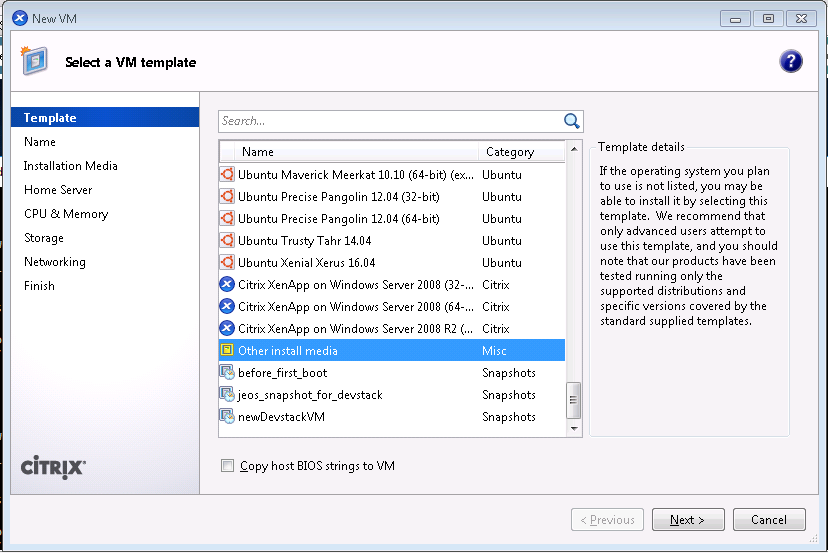
. The takes you step by step through the process of creating a new VM from a template or a snapshot, allowing you to configure operating system, CPU, storage, networking and other parameters.
You can bypass the New VM wizard and create an 'instant VM' based on a custom VM template that specifies all of the required VM configuration parameters. You simply select your preconfigured template in XenCenter then right-click and click. This mode of unattended VM installation can be useful for deploying large numbers of identical VMs. You can (or 'clone') an existing VM. You can a VM that has been previously exported.
XenServer PV drivers - XenServer Tools VMs in a XenServer environment may be fully virtualized (HVM) or paravirtualized:. In HVM (hardware-assisted virtualization or Hardware Virtual Machine) mode, the VM is fully virtualized and can run at near-native processor speeds on virtualization-enabled hardware, without any modification to the guest operating system. In paravirtualized (non-HVM) mode, the guest operating system is tuned and optimized to run in a virtual environment, independent of the underlying processor capabilities. The result is better performance and greater flexibility. Paravirtualized (PV) drivers are available for Windows and Linux VMs to enhance disk and network performance. Gujarat mitra. These drivers are supplied in the XenServer Tools package and should be installed on all new VMs - see.
XenServer features such as VM migration and historical performance data tracking are only available on VMs that have XenServer Tools installed. Using templates A number of different templates are supplied with XenServer, and these contain all the various configuration settings needed to install a specific guest operating system on a new VM. You can also create your own customized templates configured with the appropriate guest operating system, memory, CPU, storage and network settings, and use them to create new VMs. See the XenServer Virtual Machine User's Guide for a list of the templates/operating systems supported at this release, and for detailed information about the different install mechanisms on Windows and Linux. You can view the XenServer templates supplied with the product and any custom templates that you create in the Resources pane. XenServer template. Custom template In Server View, you can control whether or not XenServer and Custom templates are shown in the Resources pane:.
To show standard XenServer VM templates: on the View menu, click Server View and then click to select XenServer Templates; to hide templates, click to remove the check mark. To show custom VM templates: on the View menu, click Server View and then click to select Custom Templates; to hide custom templates, click to remove the check mark.
Hi, I noticed a few weeks ago that whenever I attach the guest-tools.iso from the pulldown in XO and run through the install, that after reboot it always says 'out-of-date' for the status. This is pretty consistent on all of my VMs in XO if I go through and attach the iso at the bottom of my available files for the DVD drive and run through the install.

Is XO possibly picking up an old install ISO, or did I miss something during the upgrade to the latest XS last month? My listing shows 3 entries there in the selection pulldown. Old version of guest-tools.iso. XenCenter.iso. guest-tools.iso I always select the guest-tools.iso and run that installer.
Thanks again! Hi, I'm trying to build up a new 'debian' virtual guest in my XO/Xen environment. I select the latest Debian template in the list and have it boot off of my Debian DVD. Everything boots fine, runs through the install ok without any errors. However, when it boots up the first time I simply see: Boot device: Hard Disk - success.
Nothing else appears and it just seems to hang there. I was reading a prior posting about debian-9-jessie-on-xenserver-6-5 and the only difference is that I'm using the full DVD to install versus the netboot iso that they were using. I'm also on the latest XS release versus the 6.5 it mentions there.
Has anyone else had issues with getting the freshly installed Debian to boot after the DVD based installer runs? I've been through this a few times and it hangs after the installer finishes each time at the same exact point. Thank you in advance!! I can confirm that it was the System Reserved partition that was being created and was causing the BOOTMGR is missing business.
I went through and followed a procedure I found on the net that has you Shift +F10 and then create the partition/format the drive with ntfs quick before proceeding with the setup/install of Win7. Here's the steps incase anyone else runs into this. Appears it would be the same for Win2k8 as well.
Once Setup is loaded, press Shift + F10 keys at the first setup screen (which allows selection of language, keyboard and locale). A Command Prompt window will be opened. Run Diskpart. Type in the following:. List disk (to show the ID number of the hard disk to partition, normally is Disk 0).
select disk 0 (change 0 to another number if applicable). clean. create partition primary. select partition 1. active.
Xen On Windows 10
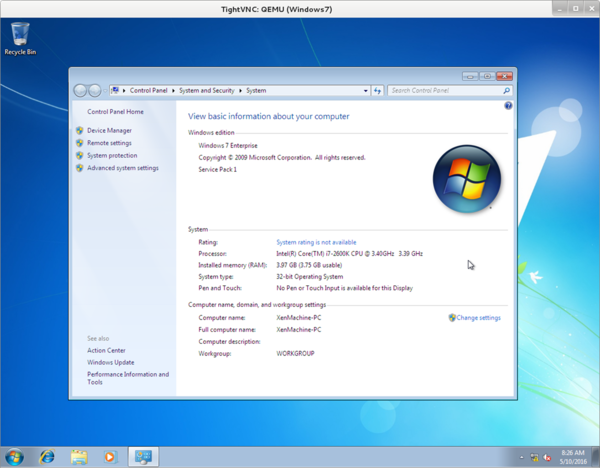
format fs=ntfs quick. exit Continue installation Everything completed successfully.
I tried a Windows 8.1 and a Windows 10 template. It boots up to the loading Windows screen with the Windows flag and just hangs. I have another WIn7 machine on an adjacent XS. I'm going to try copying it over and using that - possibly just turn it into a template to use for future. Weird how it hangs using the other templates and pukes when you use the right one. It's just WIn7 builds that are giving me trouble too. I can build WIn10 boxes and WIn2k12 boxes just fine.
Even had a Win2k16 the other day that was fine. I've tried just about all of those google options without success. I was hopeful that one of those would help me out or that someone had the same problem.
It is the default template for Windows 7 that is in the drop down /pick list there in XO. I'm running XS7.2 now and just let it use the default for Win7, then inserted the Win7 ISO disk that I had to boot up with. Interesting that it is just for WIn7 builds so far. Win10, Win2k12 all appear to work just fine. No errors are presented, it just goes through the windows GUI copying files, then restarts as one would expect for it to finish up the install, but it fails repeatedly on that initial reboot. I just tried to boot in and make sure the right partition was active, no go there.
Windows 7 Update
I've also tried the bcd ones out there too. Hi, I've done some searching without very much success on this one. Whenever I attempt to build a Windows 7 VM through XO using the Windows 7 template, it will boot initially off the ISO and copy the files. However, after the copy portion of the load, it restarts as expected and then fails miserably. The message I see on the screen is (just following the BIOS screen at power on) - Boot device: Hard Disk - success - BOOTMGR is missing, Press Ctrl+Alt+Del to restart It seems like something is failing during the copy/setup and it is unable to boot from the freshly loaded hard drive.
I only see this on Windows 7 (attempted) builds too. I've left the specs pretty much exactly to the default template for Windows 7 in XO and haven't moved/changed anything on it. Has anyone experienced this issue by chance with XenServer?? Thank you in advance. I didn't give that a thought at all. I was trying to install with a 7.2 ISO and it was giving me a fit there.
I also happened to have a 7.1 ISO on-hand and tried that. From there I was able to take the 7.2 ISO and do the same with. Thank you both for the advice!
It was a means to getting out of trouble there:) I was beginning to look at Olivier's advice next but figured I would give the 7.1 ISO a shot first and so thankful that I did!! Have a great day and thank you again!!
Comments are closed.